
Cold Brew Tea at Home: A Ratio Guide for Iced Black, Green, and Herbal Teas
Cold brew has a reputation for being fussy, and it isn't. The method is simple: tea into cold water, water into the refrigerator, wait, strain. What trips people up is the arithmetic. The ratios and times that make a lovely hot cup will give you a thin, sad pitcher if you use them unchanged, because cold water extracts slowly and selectively. Get the numbers roughly right, and a liter of smooth iced tea costs you about two minutes of actual work. Get them wrong and you'll spend the summer drinking brown water and wondering where it all went sideways.
What follows are ratios for black, green, and herbal teas, steeping times for each, a worked example you can copy on the first try, and the small adjustments that separate a pitcher you finish from one you pour down the sink.
Why Cold Water Changes the Math
Heat is a blunt instrument. Boiling water pulls everything out of a leaf at once — the floral aromatics, the caffeine, the tannins — which is why a hot cup can turn harsh while you're looking the other way. Cold water works more slowly and leaves more of the bitter, drying compounds behind. What you get instead is sweetness, aroma, and a much wider margin for error.
There's a reason for that beyond speed. The compounds that read as bitter and astringent dissolve more readily in hot water, while the aromatic oils that give a tea its perfume are volatile — they literally evaporate off a hot cup. Cold extraction favors the second group and mostly skips the first. That's why a green tea you find sharp and vegetal when brewed hot can taste like honeydew when brewed cold.
The trade-off is time and quantity. A hot steep takes three minutes; a cold one wants several hours. And because cold water moves flavor compounds so slowly, you need more leaf than usual. Start with roughly 1.5 to 2 times the amount you'd use for a hot cup, then calibrate over your first few batches. You also lose the ability to taste your way along — for the first two hours, the jar tastes like nothing at all. You're committing to a time rather than watching the clock and nudging.
The upside: cold brew has a genuinely forgiving window. Overshoot a hot steep by ninety seconds and you've ruined it. Overshoot a cold steep by two hours and you've usually just made it slightly rounder.
The Base Ratio, by the Cup and by the Pitcher
If you remember one number, make it this: 1 gram of tea per 100 ml of water is a solid hot-brew baseline. For cold brew, push that toward 1.5 grams per 100 ml for black and herbal teas, and stay closer to 1 gram for green tea, which turns grassy and harsh when you push it. Oolong sits in the middle, and white tea — delicate, mostly buds and young leaves — behaves much like green.
Scaled to a liter, it looks like this:
- Black tea: 15 g per liter (roughly 6–7 tablespoons of loose leaf, or 6–7 standard bags).
- Green tea: 10–12 g per liter (about 4–5 tablespoons, or 5 bags).
- Herbal and rooibos: 15–20 g per liter. Herbs are bulky and dilute, so err generous.
- Oolong: 12–15 g per liter.
- White tea: 10–12 g per liter, plus an extra hour.
If You Only Have Tea Bags
A standard tea bag holds about 2 to 2.5 grams of tea — less for a green tea sachet, more for a large pyramidal one. That means a liter of black iced tea is roughly six or seven bags, and a liter of green is about five. For a single tall glass (350 ml), two bags is a reliable black tea starting point and one to one and a half is right for green.
One rule matters more than the count: don't squeeze the bags when you pull them out. Squeezing pushes out the fine, bitter dust that cold brewing was supposed to leave behind. Let them drip and walk away.
Steeping Times by Tea Type
The window is wide, but it isn't infinite. Most teas are at their best between six and twelve hours; past that you start losing the top notes and picking up wood and dullness.
- Black: 8–12 hours. Longer brings malt and depth; much longer brings a flat, tea-bag-in-the-sink quality.
- Green: 4–6 hours. This is the one that punishes wandering off. Four hours for a sencha, six for a sturdy hojicha or gunpowder.
- Herbal and rooibos: 6–10 hours. Rooibos is nearly impossible to oversteep, and dried fruit and berry blends are the same. Chamomile and mint turn soapy overnight, so pull them at six.
- Oolong: 6–10 hours, depending on how roasted it is.
- White: 6–8 hours.
Room temperature is a useful middle path when you forgot to plan ahead: two to four hours on the counter, then strain and chill. It's faster and slightly more aromatic, though a touch more prone to bitterness. It also scales badly in summer — a warm kitchen pushes it faster than you expect.
A Worked Example: One Liter of Iced Black Tea
- Weigh 15 g of loose black tea — Assam, Ceylon, or an English Breakfast blend. Skip smoky lapsang souchong; cold, it becomes overwhelming.
- Add 1 liter of cold, filtered water. Filtered matters, because chlorine flattens tea aroma faster than almost anything else.
- Cover and refrigerate for 10 hours. Practically, this means starting it before bed.
- Strain through a fine-mesh sieve or a paper coffee filter. Do not press the leaves.
- Taste it. Too strong? Add cold water in 50 ml increments. Too thin? Bump the leaf by 2 grams next time.
- Serve over ice, or keep it chilled for up to four days.
The whole process is one measuring step and one straining step, which is why people who swear they don't have time for this end up making it every week.
Concentrates, Ice, and Dilution
A pitcher served over ice dilutes as it sits, and ice melts faster than most people account for. If you're pouring straight over a full glass of ice, brew at 1.5 to 2 times strength — 25 g per liter for black — and pour it undiluted. The melt brings it down to the right place within a minute or two.
Better still, keep a jar of concentrate in the refrigerator. Half a glass of concentrate topped with cold water, sparkling water, or tonic gives you iced tea on demand for the week, and it lets everyone at the table dial in their own strength. It's also the single best trick for avoiding watery second glasses.
Troubleshooting
- Bitter or drying: Too much leaf or too long a steep. Cut the time by two hours before you cut the amount — the body usually comes back before you'd expect.
- Thin and watery: You used hot-brew quantities, or your tea is old and stale. Add leaf. Also check your water; hard, mineral-heavy water mutes tea noticeably.
- Cloudy: Normal, and usually a sign of oversteeping or squeezing the bags. It's harmless, and it's less visible when the tea is well chilled.
- Grassy or spinachy green tea: Cut the steep. Green tea goes from fresh to lawn clippings somewhere past six hours.
- No flavor after four hours: You're tasting it too early. Cold water really is that slow.
Sweetening, Citrus, and Other Additions
Sugar doesn't dissolve in cold liquid. It sinks, sulks, and leaves you with a gritty last sip. Use simple syrup instead: equal parts sugar and water, heated until clear, cooled, and kept in a jar in the fridge. About 15 ml per 250 ml glass is mildly sweet; 25 ml is properly sweet. Honey works if you stir it into a spoonful of hot water first.
Add flavorings after brewing, not during, unless you want them muted. The exceptions are sturdy things like dried fruit and spices, which can go in with the leaves.
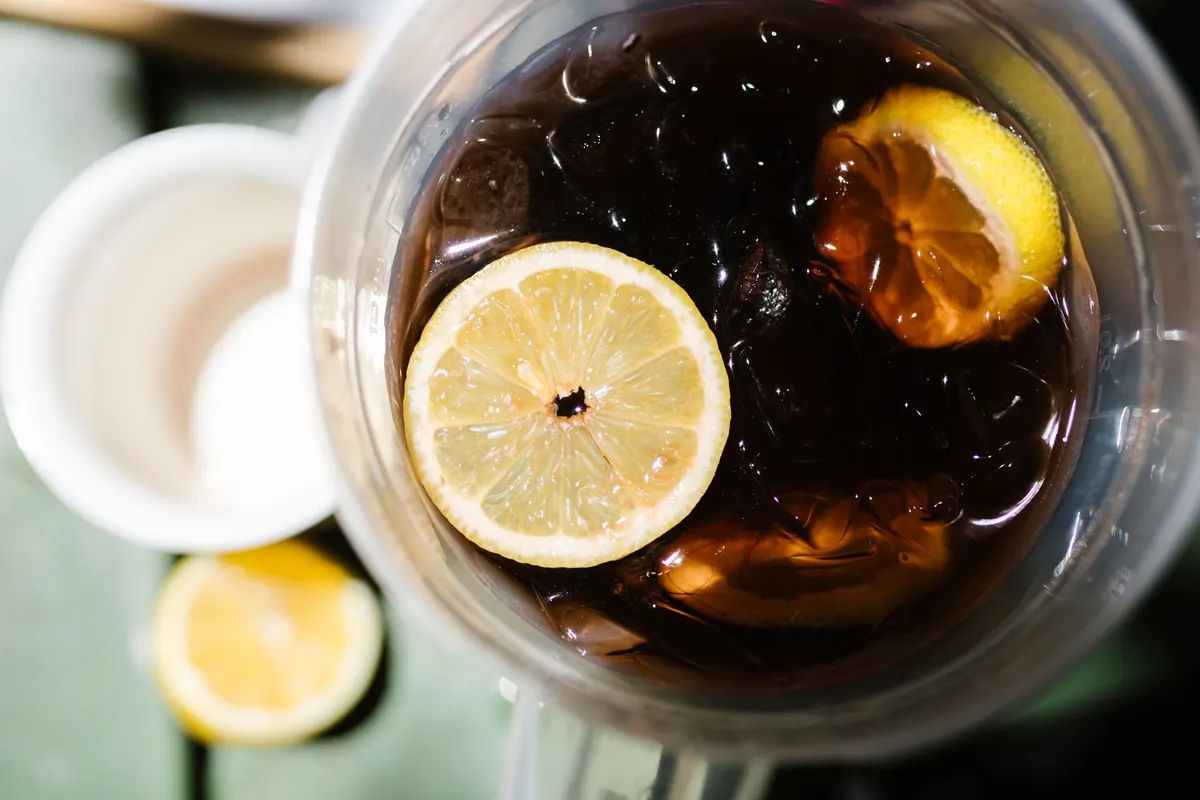
- Citrus: Slices of lemon, lime, or grapefruit. A strip of peel adds oil and lift, but avoid the white pith, which turns bitter after a day.
- Herbs: Mint, basil, or lemon verbena. Muddle them lightly and steep in the finished tea for ten minutes — they infuse fast, not in hours.
- Fruit: Peaches, berries, cucumber. Slice or muddle, then steep in the finished tea for about an hour before serving.
- Spices: Cardamom, ginger, cinnamon. These need heat to give up much, so make a quick spiced syrup rather than dropping them in cold.
Cold brew rewards patience and punishes improvisation. Write down what you did — grams, hours, water — and the second batch will beat the first.
Storing What You Make
Keep cold brew in a sealed glass jar, not a pitcher left open on the door shelf. It holds well for three to four days, longer than hot-brewed iced tea, because fewer reactive compounds made it into the water in the first place. By day five it tastes flat and slightly stale, even though it's perfectly safe.
Don't add sugar or fresh fruit to a batch you plan to keep around. Sugar ferments and fruit goes funky within a day. Sweeten and garnish by the glass, and keep the base clean.
A good cold brew habit is really just one good ratio, repeated. Pick your tea, weigh it once, set a timer for the morning, and strain it while the coffee is brewing. After two or three batches you'll stop measuring the water entirely and start recognizing the right strength by color — and that's when it stops being a project and becomes just something cold in the fridge, waiting for you.
Photo: RDNE Stock project / Pexels