How to Host a Tea Tasting Party for Beginners: Setup, Order, and Score Sheet
A tea tasting at home does not require a marble counter or a certificate on the wall. It needs a kettle, five or six curious people, and one rule everyone can follow: taste before you judge. The first party is the hardest, usually because beginners try to pour eight teas and end up with cold cups and a headache. Keep the flight small, brew with a timer, and hand out a score sheet so the conversation has somewhere to land.
Choose a Theme, a Guest List, and a Stop Time
A table of six is ideal. Four is comfortable. Eight is the point where cups go cold before they reach the last person, so one table, one host, one kettle is the honest maximum.
Pick a theme that makes comparison easy. Four teas of the same type from different regions — four oolongs, or a Japanese green beside a Chinese green — teach more than a scattered tour of the whole world of tea. Another strong first theme: one tea brewed three ways, with different water temperatures or steep times.
Set a hard stop at two hours. A four-tea flight with three infusions each runs about 75 minutes if you keep moving, which leaves room for a second cookie.
Food matters more than people expect. Serve plain, unsalted crackers, plain bread, or apple slices. Skip anything scented or strongly flavored — no cheese boards, no mint, no chocolate. Ask guests to avoid coffee, garlic, and gum for an hour beforehand.
The Supply List That Fits on One Counter
Most of this is already in a normal kitchen. Borrow the rest.
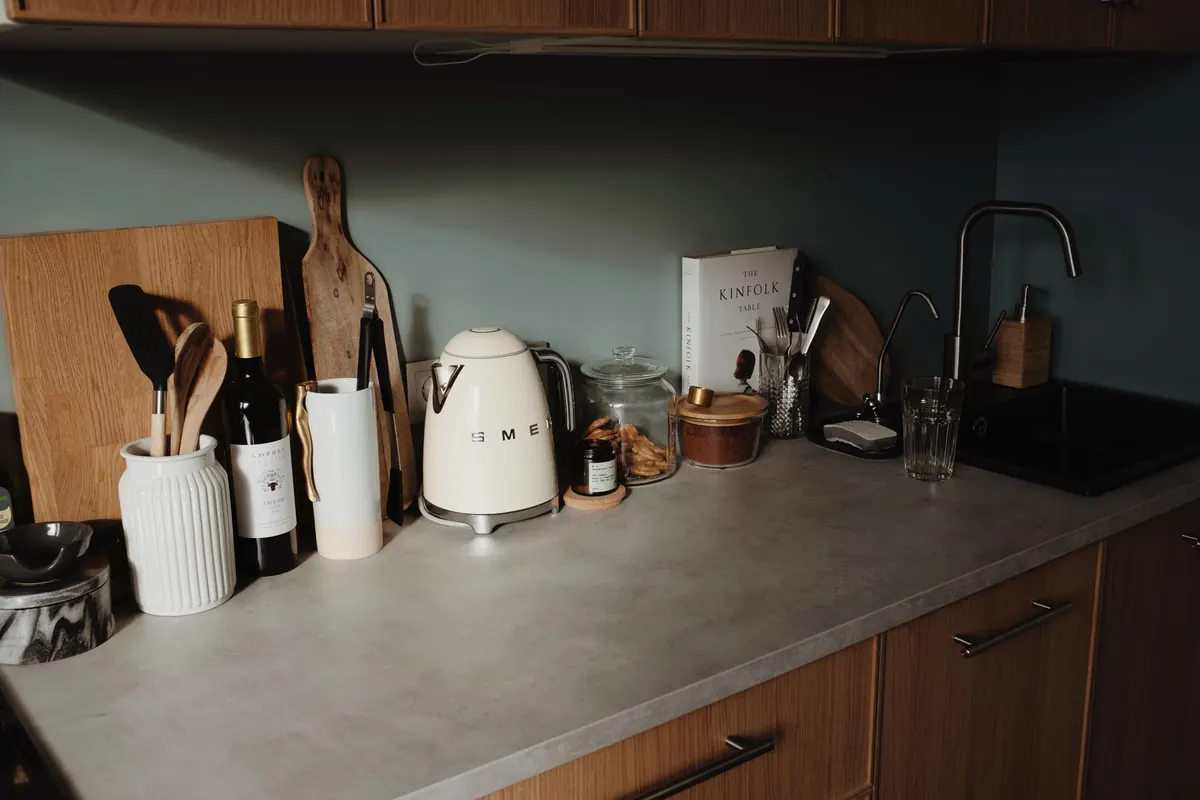
- A kettle with temperature control, or a kettle plus a thermometer
- A small scale that reads 0.1 grams (tea is light, so accuracy helps)
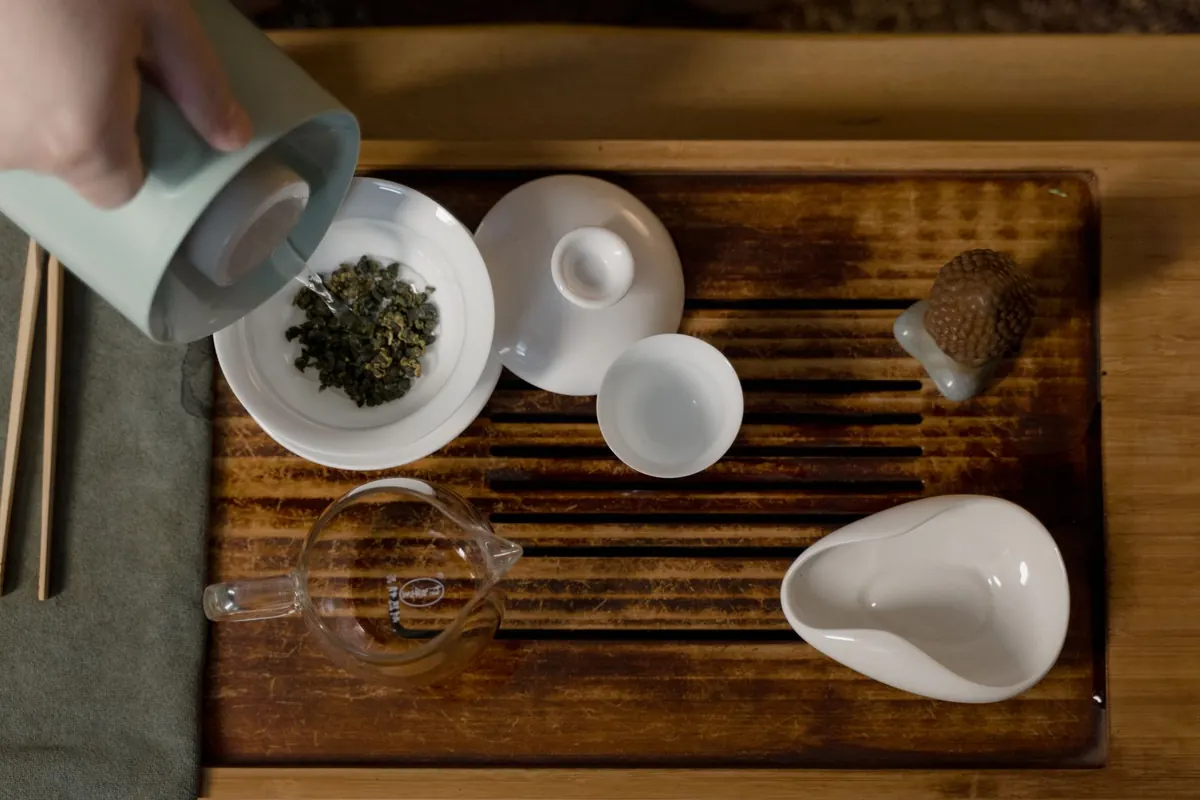
- A brewing vessel: gaiwan, small teapot, or large infuser basket
- A fair cup or small pitcher, so every cup gets the same strength
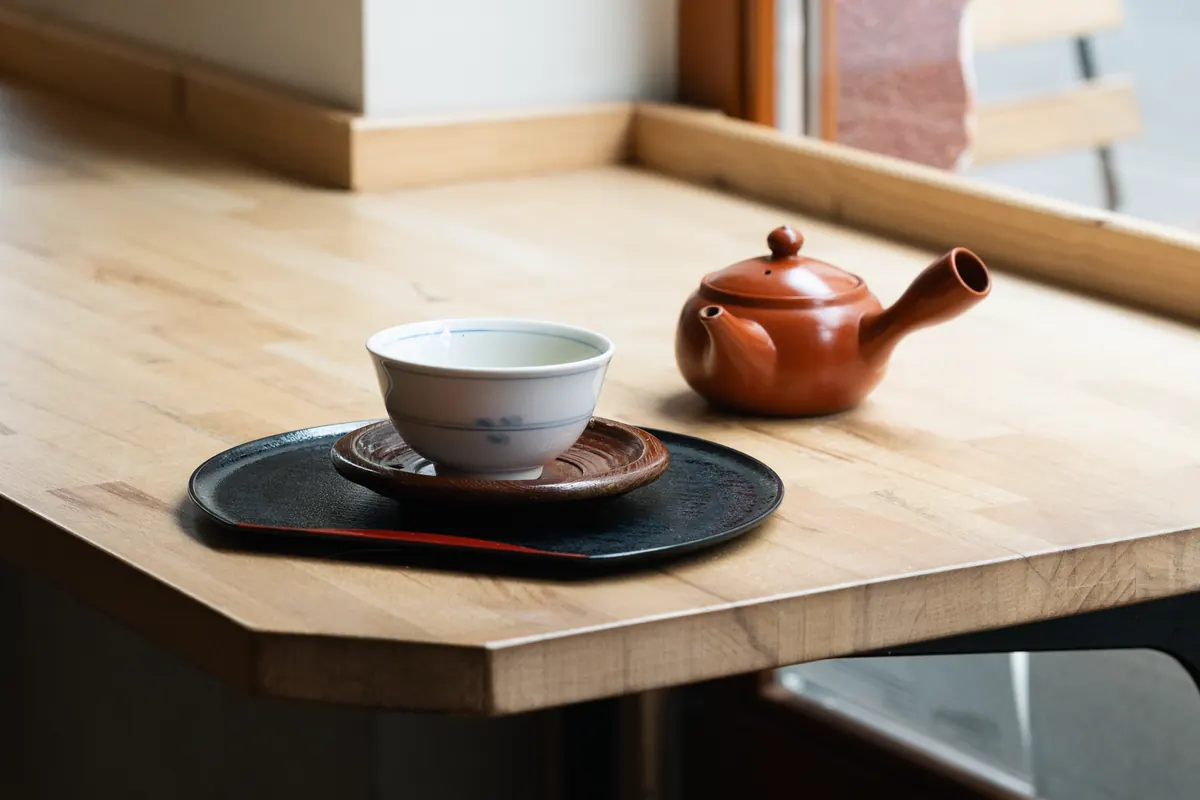
- Small cups, 30 to 60 ml. Mugs are too big for tasting — you want sips, not swallows.
- A strainer, a timer, and a bowl for spent leaves
- A rinse bowl or dump bucket. Spitting is optional, but pouring out the last sip is normal.
- Filtered water, plain paper, and pens
Skip the specialty gear. A scale and a timer will improve your tea more than an expensive pot.
Order Matters More Than the Tea
Beginners often assume the best tea should go first. The opposite is closer to the truth: start light and move heavier, so bold flavors do not flatten the delicate cups that follow.
A reliable sequence runs white, then green, then light oolong, roasted oolong, black, and finally an aged dark tea. For a first party, cut that to four: a green, a light oolong, a black, and one wildcard — a roasted oolong, a smoked tea, or an aged pu-erh.
If someone brings a smoky lapsang souchong, put it last or serve it after a cracker break. Smoke lingers on the palate and in the nose, and anything poured afterward will taste thin. The same goes for heavily roasted teas and anything with added jasmine or citrus.
Between teas, rinse the cups with hot water and let guests reset with water and a plain cracker.
How to Brew for a Group
Keep the Ratios Consistent
Consistency is what makes a tasting a tasting. Write down what you did.
- Weigh the leaf. About 5 g per 100–150 ml for short, gongfu-style steeps; 2–3 g per 200 ml for longer western-style steeps. Use the same amount for every tea in the flight if you want a fair comparison.
- Heat the water to suit the tea. Roughly 70–80°C for delicate greens and fresh whites, 85–95°C for oolongs, and just off the boil for blacks and dark teas.
- Rinse oolongs and dark teas with a quick five-second pour and discard that water. It wakes the leaves and washes off dust.
- Steep short the first time: 15–30 seconds. Add 5–10 seconds with each infusion after that.
- Pour everything from the brewing vessel into the fair cup, then into cups. Tea left sitting on wet leaves keeps getting stronger.
- Taste, dump, repeat. Three or four infusions per tea is plenty.
If a tea comes out harsh or bitter, do not panic. Drop the water temperature and shorten the next steep, then note it on the sheet. That is exactly the kind of discovery a tasting party is for.
What to Say Between Sips
Ask for one quiet sip before anyone talks. First impressions get overwritten fast.
- What does the dry leaf smell like? Now the wet leaf.
- Where do you feel it — front of the tongue, back of the throat, roof of the mouth?
- Does the finish stay with you, or disappear?
Useful words when a guest is stuck: aroma, body, astringency, sweetness, finish. Astringency is the drying, mouth-puckering feeling rather than bitterness, and it is worth separating the two out loud. Bitterness sits; astringency tightens.
Keep notes short. A single word per tea often says more than a paragraph, and it will still mean something to you a month later.
Build a Score Sheet in Ten Minutes
One page per tea per guest. Print a stack and let people write on it; phones invite distraction.
At the top, leave fields for tea name, origin or vendor, water temperature, leaf amount, steep times, and date. Then rate each tea from 1 to 5 on dry leaf appearance, aroma, liquor color and clarity, flavor, body, finish, and overall. Seven categories out of 35 is easy to total and easy to compare across the table.
Below the ratings, add one line for a single word and three or four lines for notes. Tell guests to mark an X for anything they cannot judge, and to score the cup in front of them rather than the tea they already know they love.
After the Last Cup
Collect the sheets and read the one-word answers out loud. That is usually the best part of the night. Pick the next theme while everyone is still at the table — same tea type, different country is an easy follow-up.
Save the spent leaves in a small bowl so people can smell and touch them once they have cooled. Rinse everything with hot water before washing; leaves come out of a gaiwan more easily while wet, and unglazed clay absorbs whatever sits in it.
Finally, resist the urge to add a fifth and sixth tea next time. Four teas brewed carefully, with a score sheet and a plate of crackers, is a complete evening.
Photo: Anh Nguyen / Pexels