

Tea Infuser Bottle Checklist: 7 Features to Test Before You Buy
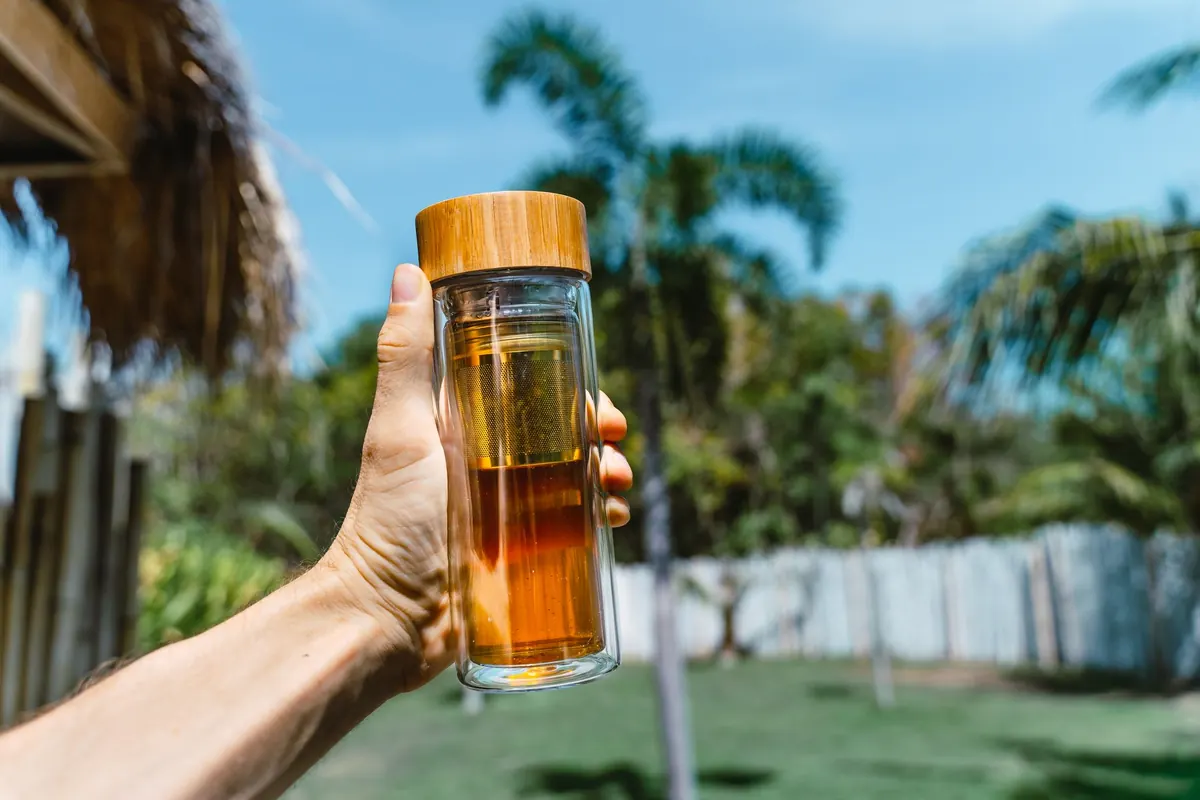
A tea infuser bottle looks like a simple thing: a vessel, a strainer, a lid that screws on. Then you brew a pot of sencha at seven in the morning, tuck the bottle into your bag, and by nine your tote smells like wet leaves and your notebook has a tea stain spreading across page four. The bottles people actually use every day differ from the ones that end up at the back of a cupboard because of a few small details that no box ever mentions. Here is what to check, roughly in the order it matters.
The lid and seal come first
Fill the bottle with cold water, close it the way you would on autopilot, and shake it upside down over the sink for a full thirty seconds. Dry the threads with a cloth, set the bottle on a paper towel, and walk away for fifteen minutes. A ring of moisture on the towel means the lid is not trustworthy, no matter how good the bottle looks.
Then repeat the test with hot water. Heat softens silicone and expands metal, and gaskets that hold cold water perfectly can weep once near-boiling tea is inside. Look closely at how that gasket sits. A silicone ring you can lift out and rinse is much better than one glued into a groove you cannot reach. Before buying, check whether spare gaskets are sold separately — a two-dollar part should not retire a thirty-dollar bottle.
If the bottle travels in a backpack or a bike pannier, a lid with a locking clip or button beats a plain twist cap. Twist caps loosen. Clips do not.
Filtration: fine enough, but roomy enough
Mesh count gets all the attention, but whole-leaf tea needs space more than it needs a tight weave. A narrow bottle packed with a full basket of leaves brews bitter, stewed tea because the leaves cannot unfurl. Fill any basket no more than half full and let the water move around them.
Test the strainer with the messiest tea you own. Shake a spoonful of a dusty herbal blend or a fine broken-leaf tea in cold water, then pour and look for grit in the glass. Particles that slip past the rim of a basket will do the same with hot tea. Also check how the strainer comes out. If it is fixed at the neck with a screw-in screen, you will be scrubbing it in place with a brush forever.
- Neck screen: compact, fine, but hard to clean and easy to clog.
- Removable basket: good leaf room, easy rinsing, sometimes leaks around the top edge.
- Two-chamber design: water stays below until you invert the bottle; excellent for control, more parts to lose.
Heat retention, and the double-wall trap
Fill a candidate bottle with hot water, wait ten minutes, and feel the outside. A good vacuum-insulated bottle stays cool to the touch while keeping the contents hot for hours. Single-wall steel and glass warm up quickly and lose heat within the hour, which is fine if you drink your tea fast and want to see the color as it brews.
The trap is that insulation hides temperature. You cannot judge how hot your tea is by holding the bottle, so sip carefully for the first few mouthfuls. Note also that not every insulated bottle is rated for hot liquids by its maker, and pressure can build in a sealed bottle holding near-boiling water. Loosen the cap slightly before you put it in a bag. Preheating with a splash of hot water for a minute makes a real difference to how long the second cup stays warm.
Cleaning is where most bottles quietly fail
Reach inside. If your fingers or a standard bottle brush cannot touch every surface, the bottle will develop a smell within a month. The three trouble spots are the neck, the mesh, and the gasket groove. Tea oils and tannins cling to all of them, and a rinse is not enough.
A weekly soak in hot water with a spoonful of baking soda lifts most stains. Dry the bottle fully, upside down and open, before screwing the lid back on. A sealed damp bottle smells musty no matter what tea you put in it next.
Treat dishwasher claims with suspicion. Many lids and gaskets survive a few cycles and then stiffen or crack. If you do use a dishwasher, keep the parts on the top rack and check the gasket afterward.
In the hand: spout, grip and one-handed life
Try opening and closing the lid with one hand, because that is how you will use it on a train or while carrying a bag. Then pour hot water and watch how fast it comes out. A wide spout on an insulated bottle moves a lot of very hot liquid at once; a narrower spout slows the flow and is safer. Check the weight when full, whether it fits your car's cup holder, and whether the cap dangles in your face while you drink. Small annoyances get louder over months.
Materials and taste
Glass is the most neutral choice and handles heat well, though it is heavier and can break. Borosilicate resists thermal shock better than ordinary glass. Stainless steel is durable and light; look for food-grade steel, and note that some drinkers detect a metallic edge with acidic infusions or heavily spiced blends. Plastic and Tritan bottles are the lightest, so confirm they are rated for hot liquids and do not hold onto the aroma of yesterday's chai. Ceramic-lined interiors taste clean but add weight.
One note worth keeping in mind: herbal blends are pleasant drinks, not treatments. If you are choosing teas for a health reason or take regular medication, ask a doctor or pharmacist rather than relying on a bottle's packaging.
The five-minute pre-purchase test
- Shake cold water upside down for thirty seconds; check for drips after fifteen minutes.
- Repeat with hot water and inspect the gasket for softness and fit.
- Brew a dusty or fine-leaf tea to see what escapes the strainer.
- Fill with hot water, wait ten minutes, and feel the outside for insulation.
- Reach inside with your hand or a brush to confirm you can clean every surface.
- Open and close the lid one-handed, then drink from the spout.
- Confirm spare gaskets are available and that returns are easy.
A practical buying routine
Buy from a shop with a real return policy, keep the receipt, and test with plain water before you commit it to tea. If it leaks, weeps, or traps water in a place you cannot dry, return it rather than adapting your habits around a bad lid. When you find a bottle that passes all seven checks, buy a spare gasket set at the same time and store it in the drawer. Two years from now, that small silicone ring will be the reason you are still using the bottle instead of shopping for another one.
Photo: Maik Kleinert / Pexels